by Julie Brewer MSc
He moves away from the stolen item, or gets off the forbidden furniture, he looks guilty when you walk in the door, so he knows he’s done wrong …. right?

It might feel that way to you but the concept of right or wrong; of guilt, is purely human.
Animals do not have the ability to recognise or react to that level of internal self-monitoring and on that matter neither do we until we a quite grown, an interesting experiment with children demonstrated this brilliantly.
If you want to know more check out The Marshmallow Test. Some people do not learn to control their impulses until they are adults, and some never develop the ability to control themselves, think serial killers.
So why does your dog look guilty?
The “guilty look” is your dog’s response to your anger, dogs are experts at reading body language, they learn to recognise when you are likely to act upset towards them.
“a better description of the so-called guilty look is that it is a response to owner cues, rather than that it shows an appreciation of a misdeed” Alexandra Horowitz
They try to switch off your angry behaviour by using puppy like responses known as appeasement behaviours, they throw themselves on the floor, lick their lips, make their eyes small, avoid your eye contact, put their ears back, do a little wee, squirm over to you, jump up and try to lick your face. They are trying to change how you are acting, all of these behaviours you might misinterpret as feeling sorry and trying to apologise, but you would be wrong. At this point they may not be afraid of you, but if you continue to be angry you will gradually make your dog more worried about how you will act. This can lead to other anxiety issues.
Why does your dog keep doing things which upset you?
Dogs are unlikely to have a concept of an inner emotional being inside you, the part of the brain which has been identified in humans as being responsible for this is not as developed in dogs. We have not yet definitively proven that they even recognise themselves as individuals, although a recent paper has shown some tempting evidence that they might.
“the first convincing evidence of body awareness through the understanding of the consequence of own actions” Lenkei et al.
There is strong evidence that they are able to learn to recognise behaviours (and perhaps scents) in you which should cause them to either avoid or approach you in expectation of reward or punishment.
Whilst it appears that dogs can plan into the future to a degree, they are unlikely to consider the consequences of their behaviour beyond their own motivation in that moment.

From the dog’s point of view the behaviour worked i.e., gets them what they needed. If the behaviour gets them what they want then they will do it again.
This might be relief from discomfort e.g., going to the toilet, relief from boredom e.g., chewing, relief from hunger e.g., stealing food, relief from loneliness e.g., howling or attempting to escape. If the behaviour solves a problem for the dog in that moment, they will do it without consideration of future consequences.
If your dog has done something and fulfilled a need, they have a learned reinforcement history, whether you like it or not, which means they are likely to try the same behaviour again. Dogs are opportunists, it is their nature, they will always be looking for reward from their environment, to expect anything else is to expect them not to be a dog.
How do you stop your dog from doing the thing you hate?
Punishment?
If we want to stop the behaviour, we might try punishment. For punishment to work it would have to be directly linked (in time) with the behaviour e.g., the moment that the dog reached to pick up your new shoes. Punishment after the action has passed and the reward has been gained will not be linked in the dog’s brain with their previous behaviour. The dog will only remember how good it felt to rip the shoes apart, and think that the human is acting strangely.
Punishment might appear to work, after all the dog stops doing what they were doing, but it is more likely that the dog is avoiding your actions than considering their own.
If the punishment is only administered in your presence, then that punishment will be linked to you being present, meaning that when your dog tries the behaviour away from you the behaviour is still rewarded, the dog learns to only do it when you are not watching. Angry behaviour from you after the act will only be linked to you, not to the behaviour, making you unpredictable, and damaging your dog’s trust in you and your relationship with your dog.
If we use some form of remote punishment with really good timing then the dog might learn to avoid doing the action which lead to the punishment, but they might also become anxious because the punishment is unpredictable. They may link the punishment to other things in the environment becoming suspicious and sensitive to other things. They might stop doing anything at all for the risk of receiving a punishment, becoming miserable and depressed, and that is not a good way to live.
Prevention?
Managing the environment to prevent the behaviour from happening, thus never allowing the dog to access the opportunity for reinforcement is a useful tool in changing unwanted behaviours, but it is not the solution. Preventing behaviours from being practiced might mean never leaving food items out on counter tops or closing doors to stop your dog accessing the sofa. You might choose to use barriers to stop your dog, however, depending upon the target of the dogs behaviour and their determination to gain access, prevention might lead to the dog’s movements being more and more restricted until they have to be left locked in a cage for hours on end.
Address the Need
If the dog’s need is not being met there will still be a drive to do the behaviour. It is better to treat the source of the behaviour which you find irritating. Find the “need” which is being answered by the dog’s behaviour and see if you can provide an outlet for the behaviour which will not upset you. Look at your home and how your dog lives within it. Set up your home so that they can access opportunities to outlets for their natural behaviours without upsetting you. Dogs do many things which do not fit well into our society, but these behaviours are all natural to the dog, and it is important to provide access, e.g., digging, hunting, chasing, biting, tearing, social contact the list is extensive and every dog will have their own preferences.
Teach Them!
Teach your dog when the behaviour is allowed and when it is not. Teach them to “leave” forbidden items on cue, use reward based methods to do this instead of making them afraid to try.
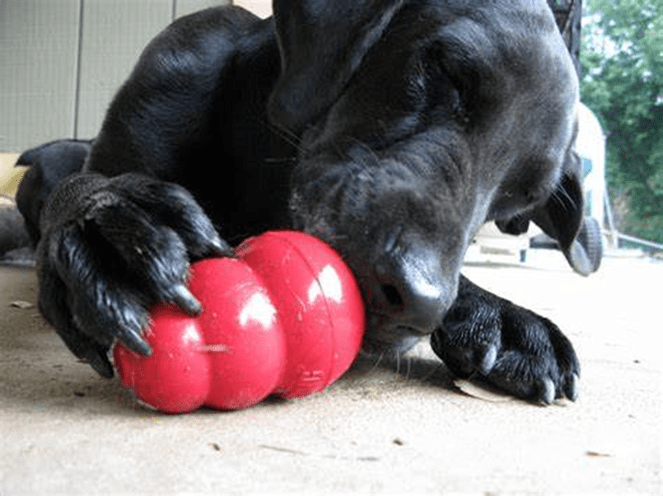
Teach them what TO DO to meet their needs, where to toilet, what to chew, where to sleep, when they are and are not invited to play, and how to spend time alone without being worried.
It is my vocation to help you and your dog to have a happier life together. Focus on your relationship and their needs and you will have the best dog and a great friend. You will both benefit from learning better ways of living together.
References
The Marshmallow Test (https://youtu.be/QX_oy9614HQ)
Disambiguating the “guilty look”: Salient prompts to a familiar dog behaviour – ScienceDirect
 LITTLE TYKES DOG HUB