By Julie Brewer, MSc CAB, pre-cert CCAB, DipCABT, RAVN
Tyke, my dog, caused bite injuries, once to a child who was on my property, and being “watched”, and once to another dog who he knew and often played with, on both occasion’s stitches were required. I was devastated and my commitment to help him was one of the reasons I started on my journey to become a behaviourist. I questioned whether I would be able to manage his life with me so that he and I would never be put into those situations again, and I’m happy to report that I did and that with training he became trustworthy 99% of the time. It turned out that his behaviour was affected by pain, and treating the pain really helped.
Despite my knowledge and experience as a dog trainer and behaviourist I now live with another dog who must be carefully managed. It is hugely important to me that no owner should ever have to feel those feelings, wondering whether you should let your dog go.
Dog ownership comes with responsibilities. You are in charge of your dog and as such you are responsible for the safety of the public at all times. There have been multiple incidences of dog attacks recently, involving both dogs and people with horrific consequences. There could be multiple different reasons for each, perhaps the actions of someone other than the owner, however, the fact is that the dog on each occasion had the OPPORTUNITY to access the person or dog. As dog guardians we can and should do more to prevent our dogs from being in situations which they do not have the skills to cope with. We should always ensure that any person looking after our dogs has the knowledge and ability to keep our dogs and the public safe.
Life is unpredictable, we have no control of others, but we can teach our dogs some skills which might help to manage situations better, such as a reliable recall, or an instant “down” on cue. In the absence of training, management and control of the environment is vital.
Management means being aware of potential risks and doing what we can to set things up so that those risks are as low as possible.
Here are some examples of how things can go wrong and some management techniques which could prevent them from happening. It is by no means an exhaustive list; you may find that looking at your home life you can think of others.
1. After each walk a dog jumps out of the car on the driveway and runs into the house. One time they see a dog or a stranger walking by, and instead of running into the house they run towards the dog/person. There are many potential risks here, the main ones being hit by a car or causing injuries or death to a car driver, and/or to the dog, injuries to the passing stranger or damage to property. This could risk expensive legal implications, and veterinary or medical costs for the owner of the dog.
Management:
Having the dogs secured in the car whilst travelling, which is a legal requirement in the UK, checking that there are no people or other animals passing before opening the car, and always putting on a lead to move the dog between house and car.
2. The dog gets out of the garden,
a. because someone has left the gate open.
Management:
Fitting key locks to gates instead of latches so that only a person with a key can open the gate. Checking that gates are secure before allowing the dog out. Providing safe ways for delivery people to enter and leave without entering the dog’s space.
b. or because the dog jumped, climbed over, or dug under the fence.
Management:
Making sure that fences and gates are secure, that the dog cannot jump, bite through, or dig under fences, regular checking of fencing before allowing the dog out and maintenance especially after bad weather.
If the garden cannot be secured then the dog should never be left unsupervised in the garden, and perhaps the use of a long line if the dog does not have a 100% recall.
3. The child walking their dog loses grip of the lead when the dog sees something/someone to chase.
Management:
Children should not be left unsupervised to walk dogs, unless they are old enough to understand the risks, they know the dog intimately and the dog is proven to be very steady in all contexts when that child is holding the lead with adult supervision. Adult supervision for young children should include two lead attachment, with the adult holding one of the leads, so that the adult is still in control.
4. A friend who does not know the dogs enters the home and the dogs become reactive or over excited, jumping up and perhaps biting. As a result, the person is injured, or their clothes are damaged, or the person tries to protect themselves because they are afraid which causes the dogs to act out of character even if they are usually friendly.
Management:
Keep doors locked so that people cannot enter your property unannounced.
Have people arrange times to visit, or telephone you from outside the house.
Do not allow the dog to greet people at the door.
Put dogs behind a door which they cannot open or stairgate which they cannot jump over.
Make sure the person does not have to share space with the dog until the dogs are calm, but only then if the dog is calm and comfortable with strangers.
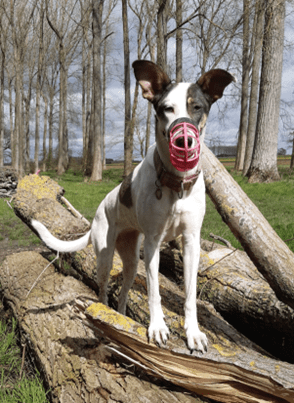
Do not allow dogs access to people in your home until they have taught them, both the person and the dog, how to be safe in each other’s company. Use a muzzle if you are not sure how your dog will react, better safe than sorry.
5. A child who is known to the dog is bitten because the dog was disturbed during sleep or when eating. Most dog bites occur to children known to the dog. All dogs can bite when they feel the need to protect themselves or something that they value.
Management:
Be careful with interactions between dogs and children, if the adult is not in the room, then the dog should be in a different room from the child. If the owner leaves the room, they should take the dog or the child with them.
Be observant of the dogs’ body language, learn how to recognise signs of irritation, over excitement or fear. Monitor how the child is acting and do not allow them to upset the dog. Remember that children will often miss signs that the dog is unhappy, if there are any signs of discomfort or over excitement then it is time for a break.
Dogs need time to rest and eat, away from the attentions of children, provide your dog with a secure space which the child is not able to enter.
Be aware of children putting their hands through stair gates, using paired gates to make a gap which the child cannot reach across will prevent this.
Things can go wrong in life, and it’s usually the dog that gets the blame, but with good management strategies we can certainly minimise the risks of these situations. If you have a dog requiring special management, make sure everyone who cares for them is aware of their needs and remember you can ask for help.
Little Tykes Dog Hub, Unit 9, Holton le Clay, Grimsby, DN32 5HS, Telephone: 07532022509, Email: tykesdoghub@gmail.com
 LITTLE TYKES DOG HUB